Pioneer Remote Control Manual: A Comprehensive Guide (Updated 02/03/2026)
This guide provides detailed instructions for programming Pioneer remotes, finding codes, and troubleshooting common issues, ensuring seamless control of your Pioneer devices.
Pioneer remote controls are essential for navigating and operating a wide range of Pioneer entertainment systems, including televisions, DVD/Blu-ray players, and audio/video receivers. Understanding your remote’s capabilities is key to maximizing your viewing and listening experience. This manual aims to demystify the programming process, offering solutions for both original Pioneer remotes and universal alternatives. Successfully controlling your Pioneer devices relies on correctly entering the appropriate codes, which can be found within this guide or on the official Pioneer support website.
Understanding Pioneer Remote Types
Pioneer offers both original, device-specific remotes designed for precise functionality, and universal remotes offering compatibility across multiple brands. Original remotes provide dedicated buttons for all features of a particular Pioneer device. Universal remotes require programming with specific codes to operate Pioneer equipment. These codes allow the universal remote to mimic the signals of an original Pioneer remote, granting control over various functions. Choosing the right remote depends on your needs and the complexity of your home entertainment setup.
Original Pioneer Remotes
These remotes are specifically engineered for Pioneer televisions, DVD/Blu-ray players, and receivers. They guarantee full access to all device features without complex programming. Typically, the user manual accompanying your Pioneer product lists the correct remote model number. Original remotes often feature direct access buttons for commonly used functions, enhancing user convenience. Replacement original remotes can be sourced from Pioneer’s official support website or authorized retailers, ensuring compatibility and optimal performance.
Universal Remotes Compatible with Pioneer Devices
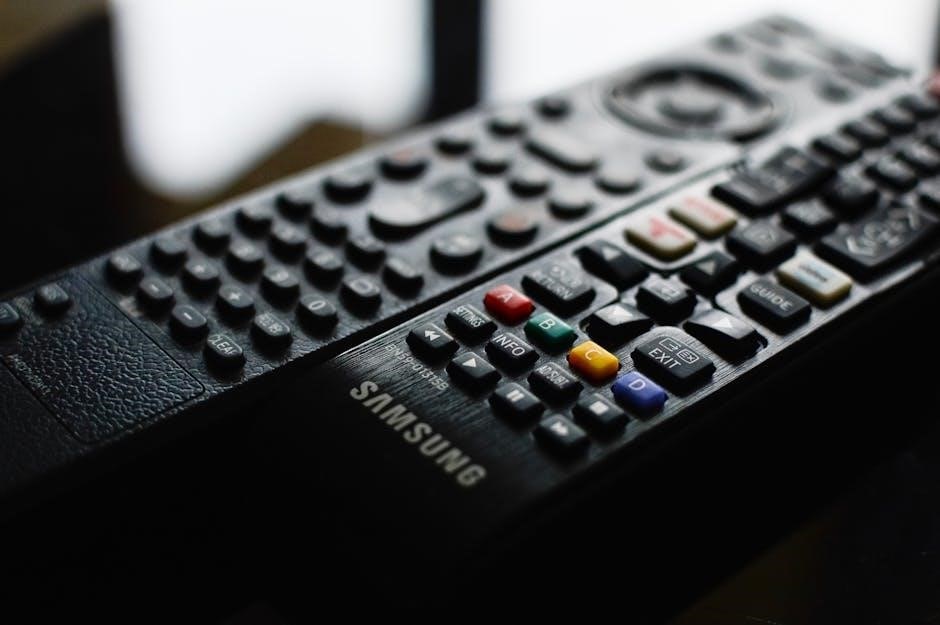
Universal remotes offer a cost-effective solution for controlling multiple devices, including Pioneer products. Compatibility is achieved through code entry or automatic code search functions. Brands like Logitech, Philips, and Universal Remote Control Inc. offer models supporting Pioneer devices; Ensure the universal remote supports infrared (IR) signals for Pioneer compatibility. Programming involves accessing a Pioneer code list and following the remote’s setup instructions for seamless integration with your Pioneer entertainment system.
Basic Remote Control Functions
Pioneer remotes provide essential functions for device operation. Power and Volume Control manage device on/off states and audio levels. Channel Navigation allows switching between channels on TVs and receivers. Input Selection enables choosing the correct source, like DVD players or streaming devices. These core functionalities ensure effortless control over your Pioneer home entertainment setup, providing a user-friendly experience for everyday use and simplified operation.
Power and Volume Control
The Power button initiates device on/off functionality, a fundamental control. Volume Up/Down buttons adjust audio levels precisely. Many Pioneer remotes feature direct access to mute, instantly silencing audio. These controls are universally applicable across Pioneer TVs, receivers, and DVD/Blu-ray players. Consistent button placement ensures intuitive operation, providing immediate and responsive control over your listening and viewing experience, enhancing overall usability.
Channel Navigation
Pioneer remotes utilize Channel Up/Down buttons for sequential channel browsing. Number keys enable direct channel entry for quick access. The ‘CH’ button often toggles between different channel lists or favorites. Some models include a ‘Guide’ button for accessing on-screen program listings. Efficient channel navigation is crucial for a streamlined viewing experience, allowing users to effortlessly switch between broadcasts and enjoy their preferred content.
Input Selection
The ‘Input’ or ‘Source’ button on your Pioneer remote allows switching between connected devices – like DVD players, gaming consoles, or cable boxes. Repeated presses cycle through available inputs. Some remotes display input names directly on-screen. Utilizing input selection ensures the correct video and audio source is active, delivering a seamless entertainment experience. Proper input management is key for enjoying all your connected Pioneer devices.
Programming a Pioneer Universal Remote
Programming a universal remote for Pioneer devices involves entering specific codes to emulate the original remote’s functions. Methods include automatic code search, where the remote cycles through codes, and manual entry using code lists. Successful programming requires pointing the remote at the TV and following the remote’s setup procedure, often initiated by pressing specific button combinations.
Automatic Code Search Method
The automatic code search method simplifies programming by allowing the remote to cycle through numerous codes until it finds one compatible with your Pioneer device. Typically, this involves pressing and holding the ‘Set’ or ‘Magic’ button while powering on the device. The remote sends signals, and upon successful recognition, the device will respond, confirming the correct code has been found and locked in.
Manual Code Entry Method
For precise control, the manual code entry method allows direct input of Pioneer-specific codes. Begin by entering the device type (TV, DVD, etc.). Then, using the provided code list, carefully input the four or five-digit code using the number keys on the remote. The indicator light confirms entry; successful programming is indicated by the device responding to remote commands.
Using the Pioneer Code List
The Pioneer code list is crucial for manual programming. Locate your Pioneer device’s model or a closely matching one within the list. Each entry provides a unique code sequence. Carefully cross-reference the device type (TV, DVD player, receiver) with the corresponding code. Accurate code selection is vital for successful remote functionality and optimal device control, ensuring a seamless user experience.
Common Pioneer Remote Codes
Accessing the correct codes is essential for universal remote setup. Pioneer offers a vast array of codes categorized by device type – TVs, DVD/Blu-ray players, and receivers/AVRs. These codes enable compatibility and control. Referencing the official Pioneer documentation or online databases provides the most accurate and up-to-date code listings for your specific Pioneer model, ensuring proper functionality.
TV Codes for Pioneer Televisions
Pioneer TV codes vary significantly based on the model year and specific features. Commonly used codes include those for basic functions like power, volume, and channel changing. However, advanced features may require unique codes. Consulting your TV’s original manual is crucial, as it often lists tailored codes. Online databases also offer extensive lists, facilitating a successful setup with your universal remote.
DVD/Blu-ray Player Codes
Programming a universal remote for Pioneer DVD/Blu-ray players requires specific codes to ensure full functionality. These codes enable control of playback, menu navigation, and disc ejection. The correct code depends on the player’s model number; therefore, referencing the Pioneer code list or the device’s manual is essential. Successful programming allows streamlined operation alongside other Pioneer components.
Receiver/AVR Codes
Pioneer receivers and AVRs often require unique remote codes due to their advanced features and connectivity. Input selection, volume adjustment, and surround sound settings are all controllable with the correct code. Finding the appropriate code for your specific Pioneer receiver model is crucial for seamless integration with your home theater system. Consult the provided code lists or your receiver’s documentation.
Troubleshooting Pioneer Remote Issues
Experiencing issues with your Pioneer remote? Common problems include the remote not responding, incorrect code entry, or malfunctioning buttons. First, ensure fresh batteries are installed correctly. If unresponsive, re-enter the code carefully, verifying compatibility with your Pioneer device. For button failures, inspect for obstructions or consider a replacement remote. A systematic approach will resolve most issues.
Remote Not Responding
If your Pioneer remote isn’t responding, begin with the simplest solutions. Confirm that the batteries are fresh and inserted with the correct polarity. Ensure there are no obstructions between the remote and the Pioneer device’s IR sensor. Try resetting the remote by removing and reinserting the batteries. Finally, verify the correct input source is selected on your TV or device.
Incorrect Code Entered
Experiencing issues after entering a code? Double-check the code against the Pioneer code list for your specific device model. If the initial code fails, systematically try alternative codes listed for your Pioneer TV, DVD player, or receiver. Remember to re-enter the code completely and accurately, following the remote’s programming instructions precisely for successful operation.
Button Malfunctions
If specific buttons on your Pioneer remote aren’t responding, first ensure the battery compartment is secure and contains fresh batteries. Gently clean the affected buttons with a soft, dry cloth. Persistent malfunctions may indicate internal damage, potentially requiring a replacement remote. Consider exploring universal remote options compatible with Pioneer devices for continued functionality.
Finding Pioneer Remote Control Manuals
Locating your Pioneer remote manual is crucial for programming and troubleshooting. Start with the official Pioneer support website, offering downloadable PDFs for numerous models. Explore online manual databases for archived versions. If the original is lost, consider contacting Pioneer customer support or searching for digital copies. Many resources provide step-by-step instructions for programming your Pioneer remote.
Official Pioneer Support Website
Pioneer’s official support website is the primary source for remote control manuals. Navigate to the support section and search by model number to find downloadable PDF versions. These manuals often contain specific programming codes and detailed instructions tailored to your Pioneer device. Regularly updated, it ensures access to the most current information for optimal remote functionality and troubleshooting assistance.
Online Manual Databases
Numerous online databases compile remote control manuals, offering a convenient alternative if the official Pioneer website lacks your specific model. These repositories often feature user-submitted codes and programming guides, expanding available resources. Websites dedicated to universal remote controls frequently host Pioneer code lists and troubleshooting forums, providing community-based support and solutions for programming challenges.
Lost Manual Replacement Options
If your original Pioneer remote manual is misplaced, several options exist for replacement. Contacting Pioneer support directly may yield a downloadable PDF or a physical copy for a fee. Exploring online manual databases is a cost-effective solution, often providing digital versions. Additionally, searching online auction sites or forums dedicated to Pioneer products might uncover used manuals available for purchase from fellow enthusiasts.
Advanced Features & Settings
Some Pioneer universal remotes offer advanced capabilities like macro programming, allowing multiple commands to execute with a single button press. Learning functionality enables the remote to mimic commands from other devices. Explore settings for backlight control, adjusting brightness or enabling automatic activation in low-light conditions for enhanced usability and convenience. These features elevate your entertainment experience.
Macro Programming (If Supported)
Macro programming lets you combine several remote commands into a single button press, automating complex sequences. For example, power on the TV, receiver, and select the correct input with one touch. Consult your remote’s manual for specific instructions, as the process varies by model. This feature streamlines operation, eliminating multiple steps for common actions and enhancing convenience.
Learning Functionality (If Supported)
If your Pioneer remote supports learning, it can mimic commands from other remotes, even those not originally designed for Pioneer devices. This is useful for controlling devices without dedicated codes. The remote “learns” the infrared signal by having both remotes pointed at each other. Refer to your remote’s manual for detailed, step-by-step learning instructions, ensuring compatibility and proper signal acquisition.
Remote Control Lighting & Backlight
Some Pioneer remotes feature illuminated buttons or a backlight, enhancing visibility in low-light conditions. These features typically activate automatically when a button is pressed or can be toggled manually. If your remote has this functionality, consult the manual for specific activation methods and potential battery life impacts. A functional backlight significantly improves usability in darkened home theater environments.

Battery Replacement and Maintenance
Maintaining your Pioneer remote involves proper battery care. Use recommended battery types – typically AAA or AA alkaline batteries – for optimal performance. Ensure correct polarity during installation. Regularly inspect the battery compartment for corrosion and clean if necessary. Store the remote in a cool, dry place when not in use to prolong battery life and prevent damage.
Recommended Battery Types

For consistent performance with your Pioneer remote, alkaline batteries are generally recommended. Specifically, AAA or AA sized batteries are most commonly used, depending on the remote model. Avoid using rechargeable batteries initially, as they may have lower voltage. If using rechargeables, ensure they are fully charged. Lithium batteries offer extended life but can be more expensive.
Proper Battery Installation
Always observe the correct polarity when installing batteries – match the plus (+) and minus (-) markings inside the battery compartment. Ensure batteries are securely seated, making good contact with the terminals. Avoid mixing old and new batteries, or different battery types. Replace all batteries at once for optimal performance and to prevent potential leakage or damage to the remote.
Cleaning and Storage
To clean your Pioneer remote, gently wipe it with a soft, dry cloth. Avoid using liquid cleaners or abrasive materials, as these can damage the surface. When not in use, store the remote in a cool, dry place, away from direct sunlight and extreme temperatures. Proper storage helps prevent battery corrosion and ensures the remote’s longevity;